
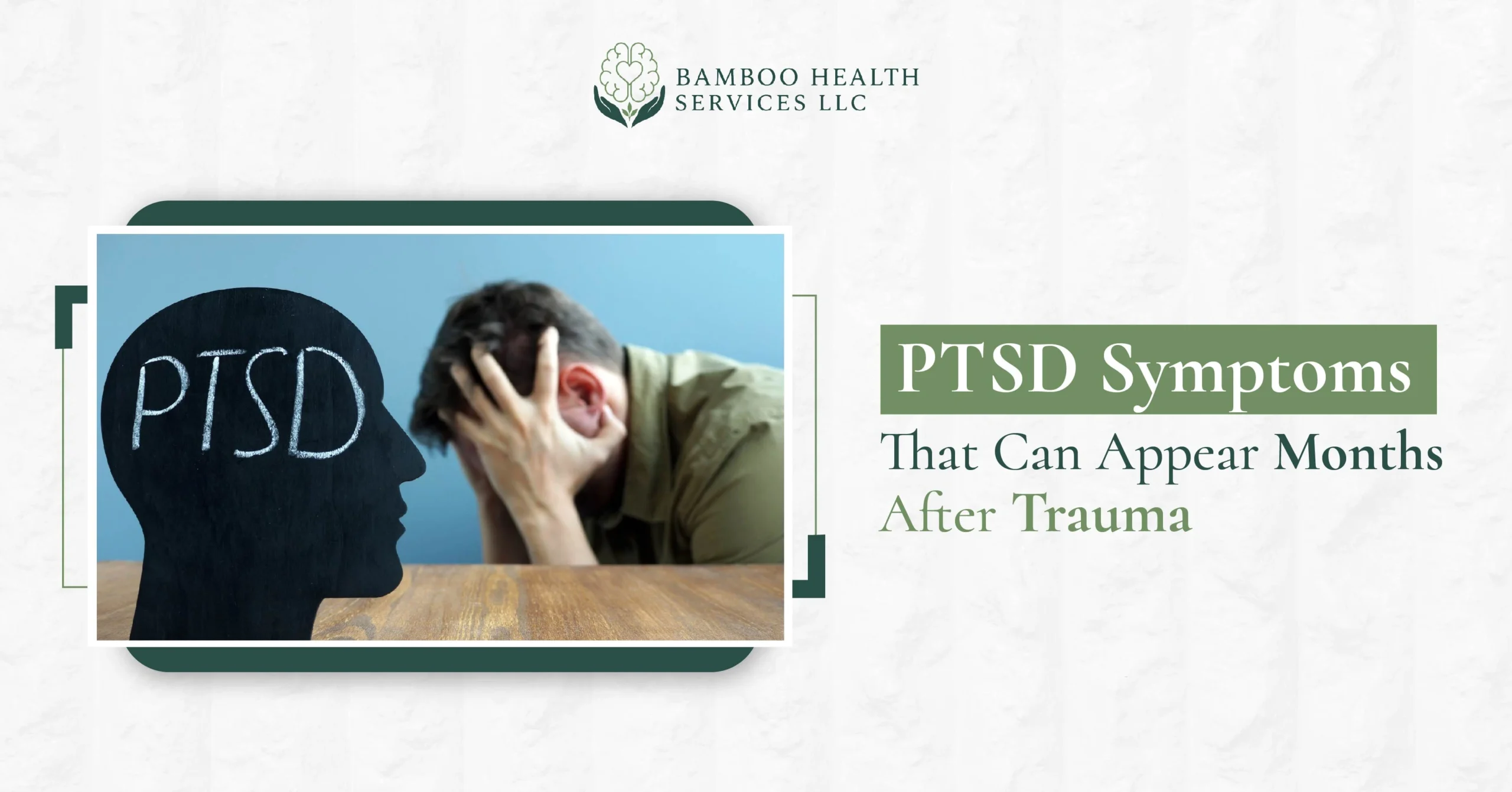
Trauma does not always announce itself right away. Sometimes people get back to their normal lives after a frightening event. But after some months, or even years, some intrusive memories, a sharp increase in anxiety, sleep disturbance, or a feeling of numbness start to appear in a way that feels confusing and intrusive.
This experience is real and recognized in clinical practice. Recognizing that the signs and symptoms of post-traumatic stress disorder (PTSD) may have an onset that is delayed can help alleviate feelings of shame and allow there to be effective support.
Understanding Delayed Expression of PTSD
PTSD is a trauma- and stressor-related condition that can develop after exposure to actual or threatened death, serious injury, or sexual violence. Symptoms typically fall into several areas: unwanted re-experiencing of the event, efforts to avoid reminders, shifts in mood and thinking, and changes in arousal and reactivity.
In many cases, symptoms begin within the first weeks or months. However, the diagnostic framework includes a specifier called “with delayed expression.” This means the full set of criteria for PTSD is not met until at least six months after the traumatic event, even though some milder symptoms may have been present earlier. In other words, the distress can build gradually or become more noticeable over time rather than appearing all at once.
It is less common for someone to have a completely symptom-free period followed by a sudden full onset. More often, quieter signs such as occasional irritability, lighter sleep, or a vague sense of being on edge exist in the background and later intensify. Recognizing this pattern helps people understand that their later struggles are still connected to the original experience.
Why Symptoms Can Appear Months Later
Several factors can contribute to a delayed presentation. Following trauma, the mind and body are often more focused on survival and functioning than on dealing with the trauma itself. They can try to move on by being busy, by paying attention to someone else, or by dissociating their feelings from the event. These approaches might be adaptive and shorten the processing of more meaningful content.
New life stressors continue to initiate demands on coping systems with the passage of time. Sometimes the responses that were previously lived through can bubble to the surface with a greater intensity when a new job loss, relationship change, health issue, anniversary of the event, or even a moment of calm unfolds. The nervous system can become more heightened for reminders and fear, and memory circuits can remain activated as if the danger is not gone.
Neurobiological processes also contribute to this. Threat-related information may get stored and retrieved by the brain differently when a trauma occurs. With time, stress responses increase in strength (sensitization). Factor in challenges that are present or a decreased amount of support, and symptoms move into more clearly manifested impairment.
All of this is not a sign of weakness or that the trauma couldn’t be “handled.” It shows the changes to the brain and body’s systems that happen when it is experiencing extreme stress and how changes can occur.
Common Symptoms That May Emerge Later
Symptoms of delayed-expression PTSD are identical and involve the same core experiences as more immediate presentations of PTSD. They are just more prominent, or more upsetting, when they have been unresolved at a later time.
- Re-experiencing can involve distressing memories throughout the day, including disturbing nightmares or having the trauma re-experienced. These can be activated by sight, sounds, smell, or even by having a feeling/mood.
- Sometimes avoidance manifests itself in avoiding talking, or going to places, people, or things that make the event flash into mind, or in avoiding the activity. Others may also distance themselves from thoughts and feelings of the trauma, resulting in feelings of shutting down emotionally.
- Thoughts and mood changes can include low self-esteem or self-beliefs, faulty thinking about blame, fear, or shame, loss of interest in past hobbies, and feeling disconnected from others. Some memory impairment about important aspects of the event may even happen.
- Signs of arousal and reactivity may involve exaggerated startle reactions to bright lights or loud noises, always being on the lookout for something that may be dangerous, being irritable or outraged, problems with focus and attention, and very poor sleep. Others also experience heightened risk-taking and/or self-destructive behavior.
These experiences can be particularly disturbing when they occur much longer after the person thought “over it.” Getting an unexpected shock can cause additional stress.
What Can Trigger the Appearance of Symptoms
Certain situations have a tendency to highlight later symptoms. The buffers that keep reactions in check may decrease in such major life transitions as retirement, loss of a loved one, becoming a parent, or a new health condition. Reminders can be anniversaries of the trauma, or recounts of other traumas in the news or through discussions.
Extra stressors of any type can be a burden. When the coping ability is already stretched thin, earlier unresolved responses come to the surface and intensify. For some people, having time to slow down and think about things can allow symptoms that were hidden by being busy all the time to appear.
Understanding possible triggers does not mean a person should avoid life. It simply offers context for why symptoms might surface when they do and highlights the value of support during times of change.
How These Symptoms Affect Daily Life
In times of heightened PTSD symptoms, these symptoms can impact relationships, functioning, sleep quality, and feelings of uncertainty and lack of safety. Individuals may be irritated with family members, may find it difficult to concentrate at work, and may become distant from social activities. It is normal to experience physical tension, fatigue, and concentration problems. Others engage in drinking or other substances as a means of suppressing the voices within, making the problems more complicated.
The impact is often cumulative. It can initially be occasional nights of waking or increased alertness, but then not be managed and can slowly decrease the quality of life. It is important to identify and intervene early.
When to Seek Professional Help
It is worth reaching out if symptoms are causing significant distress, interfering with daily functioning, or lasting longer than a few weeks. You do not need to wait until everything feels overwhelming. A professional evaluation can clarify whether the experiences fit a PTSD picture, identify any co-occurring concerns such as depression or anxiety, and guide next steps.
Seeking help is a practical and courageous response, not a sign that someone is failing to cope.
How Psychiatric Care Can Support Recovery
Effective care for PTSD often combines specialized therapy approaches with careful attention to overall mental health. Trauma-focused psychotherapies have strong evidence for helping people process the experience and reduce symptom intensity. At the same time, psychiatric evaluation and medication management can play an important supportive role.
Certain medications, particularly specific antidepressants that affect serotonin pathways, can help ease intrusive symptoms, improve sleep, reduce hyperarousal, and address co-occurring mood difficulties. A thoughtful medication plan is individualized, monitored over time, and adjusted based on response and tolerability.
At Bamboo Health Services, our Psychiatric Mental Health Nurse Practitioner provides comprehensive psychiatric evaluations that explore trauma history, current symptoms, medical factors, and personal goals. We offer medication management when appropriate, ongoing follow-up to track progress, and patient education so individuals understand their symptoms and treatment options. Our approach emphasizes compassion, collaboration, and evidence-informed care tailored to each person’s needs.
Practical Tips While Seeking or Beginning Support
A few good grounding strategies to note when arranging professional care:
- Focus on simple nighttime, eating, and exercise (where possible). These help to regulate the nervous system.
- Avoid excessive exposure to news or talking about traumatic events (if this increases stress).
- In times of greatest stress or anxiety, see or notice five things you can see, 4 things you can touch, three things you can hear, etc.
- Maintain connections with trusted people who can be present in an unjudgmental way.
- Be patient with yourself and try to be as compassionate as possible with yourself. Don’t feel bad if it takes some time to develop symptoms.
These steps are to complement and not replace professional evaluation and treatment.
Moving Forward with Understanding and Support
PTSD symptoms that appear months after trauma are a recognized and treatable pattern. They reflect the complex ways the mind and body respond to overwhelming experiences rather than any personal shortcoming. With accurate information, compassionate evaluation, and appropriate care including medication management when helpful, many people experience meaningful relief and reclaim a greater sense of safety and connection.
If the experiences described here resonate with you or someone you care about, consider reaching out. The team at Bamboo Health Services is here to listen, evaluate thoroughly, and partner with you in creating a path toward greater stability and well-being. You do not have to navigate this alone.
FAQs
Can PTSD really start months or even years after a traumatic event?
Yes. Full diagnostic criteria may not be met until at least six months later, even if milder symptoms were present earlier. Life stressors or reduced coping capacity can bring symptoms into clearer focus.
Does delayed expression mean the trauma was not “serious enough”?
No. The timing of symptoms does not reflect the severity of the original event or a person’s strength. Trauma responses vary widely.
Are the symptoms different when they appear later?
The core symptom clusters are the same. What often differs is the person’s surprise and the presence of newer life stressors that may amplify them.



No comment